Field notes · Jonathan Malchow Vega
What the final document leaves out
A finished page can hide the decisions that produced it.
Last reviewed
A polished document is only one view
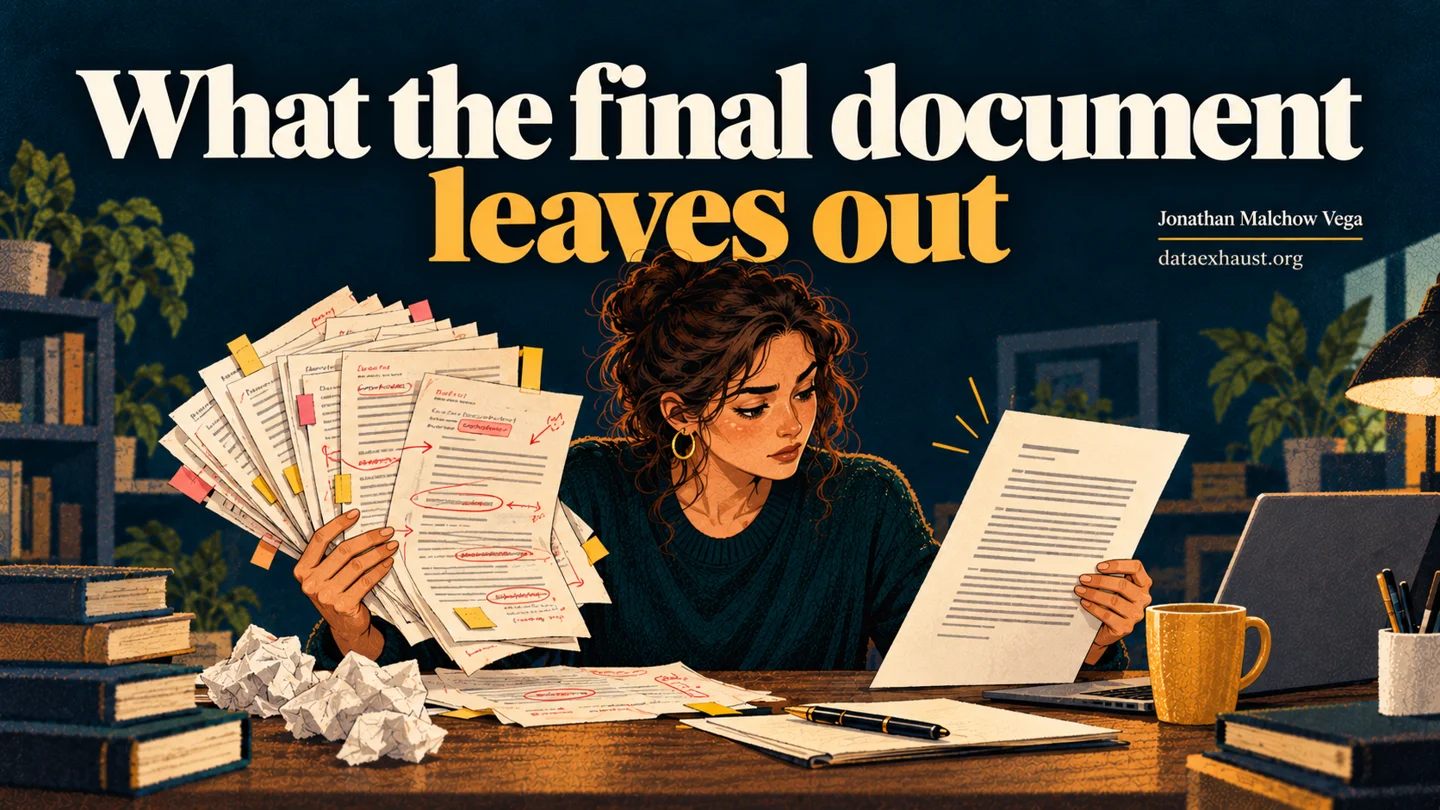
Imagine a team choosing a new supplier. The final recommendation names one vendor and gives three reasons. Earlier drafts show that the team considered a fourth reason, challenged its evidence, and removed it. The final page tells us what was recommended. The drafts help explain how the recommendation changed. This is a hypothetical example, but the distinction is useful.
Keep the connection
A revision history becomes harder to interpret when its document, author, and date are separated. A comment saying “agreed” tells us very little without the question it answers. Before treating an old draft as useful context, establish which decision it belongs to and whether it represents an approved position or an abandoned possibility.
Choose what deserves to survive
Keeping every duplicate forever is not a workable substitute for a retention decision. Start with a consequential decision and identify the records that explain it: the approved version, the supporting evidence, and the reason for a material change. Retention and access decisions need to account for obligations and the sensitivity of the material.
Try this
Pick one document your team uses regularly. Can another person identify the current version, its owner, and the record of its last significant change? Write down the missing connection before introducing another tool.
Short answers
What does a final document leave out?
A finished page tells you what was recommended, but it can hide the decisions that produced it. Earlier drafts help explain how a recommendation changed, such as a reason the team considered, challenged, and removed.
How do you know if an old draft is useful context?
Establish which decision the draft belongs to and whether it represents an approved position or an abandoned possibility. A revision history becomes harder to interpret when its document, author, and date are separated.
Should you keep every draft and duplicate forever?
No. Keeping every duplicate forever is not a workable substitute for a retention decision. Start with a consequential decision and identify the records that explain it: the approved version, the supporting evidence, and the reason for a material change.
Continue reading
Related in the DESCRIBED series: Which version should I trust? (Knowledge Cleanup)